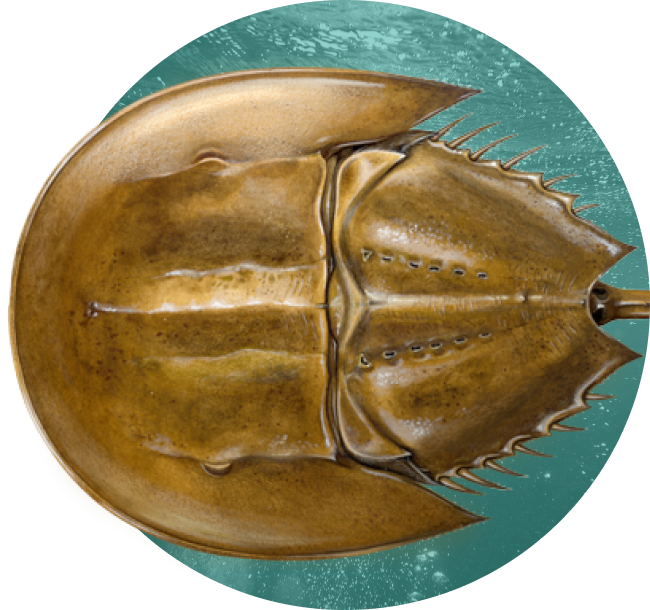
Galloway, NJ – The Commission’s Horseshoe Crab Management Board authorized development of an addendum to the Interstate Fishery Management Plan (FMP) for Horseshoe Crab to reduce or eliminate harvest of Delaware Bay horseshoe crabs. The Draft Addendum will propose a two-year harvest moratorium in New Jersey and Delaware, with an exemption for harvest for biomedical use. It will also present options to restrict harvest of horseshoe crabs of Delaware Bay origin in jurisdictions outside of the Bay.
The proposed action responds to public concern regarding the horseshoe populations and their ecological role in the Delaware Bay. While there are a number of scientific reviews on the status of horseshoe crabs, there is no peer-reviewed coastwide estimate of horseshoe crab abundance. The U.S. Fish and Wildlife Service Shorebird Technical Committee has indicated that the red knot, one of many shorebird species that feed upon horseshoe crab eggs, is at low population levels. Red knots have shown no sign of recovery, despite a four-fold reduction in horseshoe crab landings since 1998. The Shorebird Technical Committee concluded a moratorium of horseshoe crab harvest could provide more eggs for the birds to feed upon. The Board initiated the addendum process to focus further restrictions on crab harvest in the Delaware Bay region, which is the epicenter of horseshoe crab production along the coast as well as a critical stopover area for many migratory shorebirds including the red knot.
Several recent horseshoe crab population modeling approaches are currently being explored. The Horseshoe Crab Technical Committee conducted a general review of the new models. However, it will critically review the models, particularly the surplus production model, and provide the Board specific recommendations regarding the appropriateness of sending the models forward for peer review.
The Management Board will meet in February 2006 to review and consider approval of the draft addendum for public comment and review. For more information, please contact Braddock Spear, Fisheries Management Plan Coordinator, at (202) 289-6400 or bspear@asmfc.org.